
October is Breast Cancer Awareness Month and Bloom Ob/Gyn is your go-to for breast cancer gene testing Knowing your genes helps you understand your risk Knowing your genes helps us individualize your breast cancer screening plan
First, a bit of history
 The first breast cancer gene – BRCA1 (for BReast CAncer gene) – was discovered in 1994 by Mary-Claire King, a pioneer in Human Genetics. The second breast cancer gene, BRCA2, was identified in 1995. In the intervening 26 years, multiple other cancer-causing genetic mutations have been identified and these have been linked to breast, ovarian and colorectal cancers, among others.
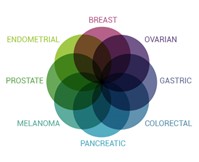 As the field of Human Genetics evolved, testing became easier and more accessible. These days, a simple blood draw or saliva test can tell you a lot about your heritage, your risk for disease, identify long lost family members and even solve previously unsolvable crimes.
But with that ease comes concern. Will I be discriminated against because of my DNA?
 In 2008, Congress passed the Genetic Information Nondiscrimination or GINA Act. This act bars the use of genetic information in health insurance by prohibiting group health plans and health insurers from denying coverage to a healthy individual or charging that person higher premiums based solely on a genetic predisposition to developing a disease. The GINA Act also bars employers from using an employee’s genetic information when making hiring, firing, job placement, or promotion decisions.
How do I know if I’m at risk?
 Your family history of cancer is the most useful and powerful tool to determine your personal risk for breast (and other) cancers. At Bloom Ob/Gyn, all new patients and all those returning for annual preventive care fill out a Cancer History Form so that we can better understand that family history. By answering a series of simple questions, we will help determine if you meet criteria for testing. A “YES” to any of the following would indicate that you might be at risk for having an inherited genetic mutation related to breast cancer:
- A close relative diagnosed with breast cancer under the age of 50 years old
- A breast cancer diagnosis in a family of Ashkenazi Jewish descent
- Three or more relatives on one side of your family with breast cancer
So, we know about genetic mutations linked to breast cancer and we know that legislation has been passed to protect us if we pursue testing and test positive. We also know that family history is the best tool to determine who should be tested. Now what?
How do I get tested at Bloom Ob/Gyn?
For those who screen positive on our Cancer History Form, we coordinate a virtual visit with a Genetic Counselor on the same day that we identify your risk. A simple blood draw is done in our office and the sample gets shipped to Myriad – a genetic testing laboratory based in California. In about 3 to 4 weeks, we have results to review, and a follow up counseling session is scheduled with your Bloom Ob/Gyn provider. We review your genetic testing results and any breast cancer screening recommendations specific to you.
Genetic mutation carriers might be referred to a Breast Specialist for further discussion and management. Also, some patients might be at risk for other cancers, not just breast cancer, and we can help coordinate this care.
If I test negative, does that mean I won’t develop breast cancer?
The simple answer is no. Breast cancer can develop in anyone at any age. We know that genetic mutations like BRCA1 and BRCA2 increase that risk and a negative result is reassuring, but not a guarantee against cancer.
A negative test result also comes with a personalized lifetime risk calculation that gives us a better sense of your personal breast cancer risk in the absence of a genetic mutation. This lifetime risk helps cater breast imaging specific to you and your history. Some patients might qualify for more frequent breast cancer screening with a mammogram or breast MRI on an annual basis.
Early detection saves lives!
If you think you might be at increased risk for breast cancer, call Bloom Ob/Gyn today to schedule a visit with one of our providers. From risk assessment – to testing – to results review, our team is here to guide you through the process of understanding your genetics and breast cancer risk.
Contact us:
Bloom Ob/Gyn
4001 Brandywine St. NW, Suite 300
Washington DC 20016
Phone: (202) 449-9570