Our comprehensive healthcare team will help you achieve optimal health and well-being. Our providers have 30 years of collective experience specializing in General Obstetrics and Gynecology. We strive to provide women of all ages in the Greater Washington DC area with the highest level of personalized care. We are accepting new patients and we are in-network with CareFirst, Aetna, Cigna, Johns Hopkins Healthcare EHP and US Family Health Plans, and United Healthcare.
Learn more about our team
Breast cancer screening is a set of checks that look for cancer before it causes symptoms, when it is smallest and easiest to treat. The right plan depends on your age, your family history, and what your own breast tissue looks like on imaging. Here is how screening changes by decade in 2026, and how…
Uterine fibroids are noncancerous growths that develop in the muscle wall of the uterus. They are very common, and many women have them without ever knowing. When fibroids do cause trouble, the symptoms range from the well known, like heavy periods, to the surprising, like nausea, dizziness, and low back pain. Here is how to…
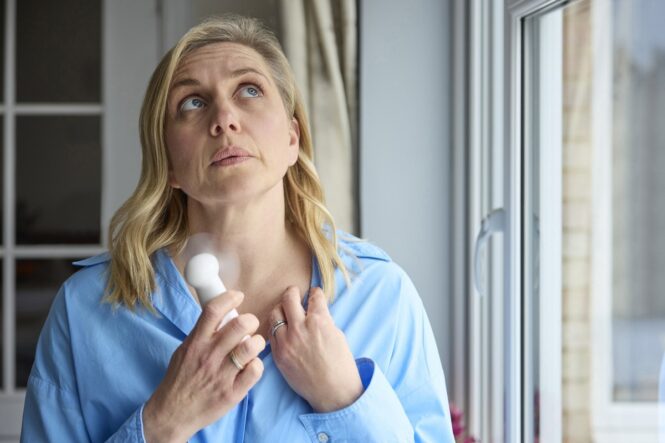
Perimenopause and menopause are two different stages, not two words for the same thing. Perimenopause is the transition, a stretch of years when your ovaries gradually wind down and your estrogen and progesterone levels swing up and down instead of following a steady monthly rhythm. Menopause is a single point in time, the day you…
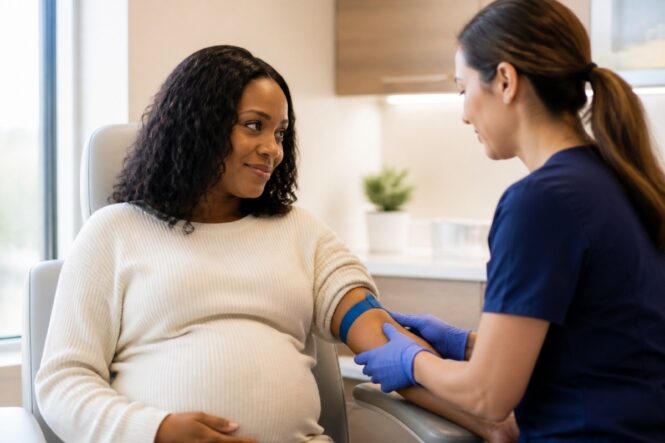
NIPT stands for noninvasive prenatal testing, which is a blood test that screens a pregnancy for a small number of specific chromosomal conditions. You may also hear it called cell-free DNA screening. During pregnancy, tiny fragments of DNA from the placenta circulate in your bloodstream. A lab analyzes those fragments in a sample of your…
An abnormal Pap result can feel alarming, but it is often linked to a very common cause: HPV, or human papillomavirus. HPV is the most common sexually transmitted infection, and most people who are sexually active will get it at some point. In most cases, the body clears it on its own without any problems.…
Eating well during pregnancy gives your baby the building blocks for healthy growth. It can also leave you with a lot of questions. Some foods carry a small risk of bacteria or too much mercury, while others are packed with the nutrients you and your baby need most. The good news is that the rules…
Vaginal pH is a measure of how acidic or basic the inside of your vagina is. It runs on a scale from 0 to 14, where lower numbers are more acidic and higher numbers are more basic. A healthy vagina is normally a bit acidic, usually somewhere between 3.8 and 5.0. That acidity is not…
Douching means rinsing the inside of your vagina with a mix of water and other fluids, often something scented or sold as a “cleansing” product. Many people do it because they think it will wash away odor or make them feel fresher. The truth is that your vagina does not need to be cleaned on…
Anxiety and depression during pregnancy are among the most common complications of the perinatal period. Research estimates that approximately one in seven women experience a perinatal mood disorder during pregnancy or in the first year after giving birth. Despite how common these conditions are, they often go unrecognized and untreated. Many women assume that feeling…
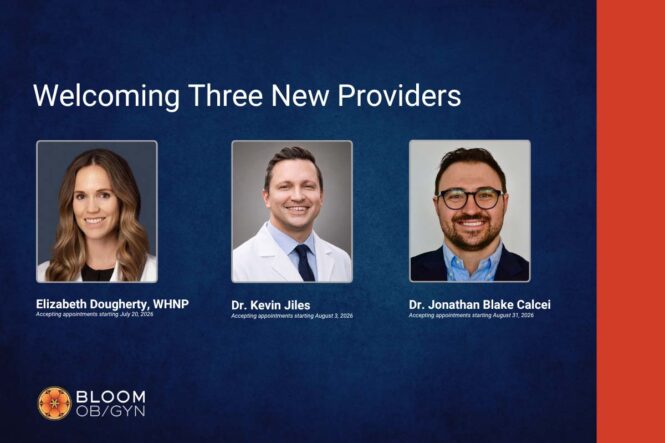
We have some happy news to share! This summer, three new providers are joining the Bloom OB/GYN team, and we could are excited to introduce them to you. Growing our practice means more than adding names to a schedule. It means we can see you sooner, spend the time your care deserves, and keep building…
If you are in your 40s and noticing that things feel “off” but you cannot quite pinpoint why, you are not imagining it. Perimenopause is the transitional phase leading up to menopause, and it can begin as early as 10 years before your periods stop for good. During this time, your estrogen and progesterone levels…
Noninvasive prenatal testing, commonly called NIPT, is a screening blood test performed during pregnancy that analyzes small fragments of DNA circulating in a pregnant person’s blood. This cell-free DNA comes from the placenta and reflects the genetic makeup of the developing baby. NIPT is used to estimate the risk that a fetus may have certain…