
Start with Your Top Priorities
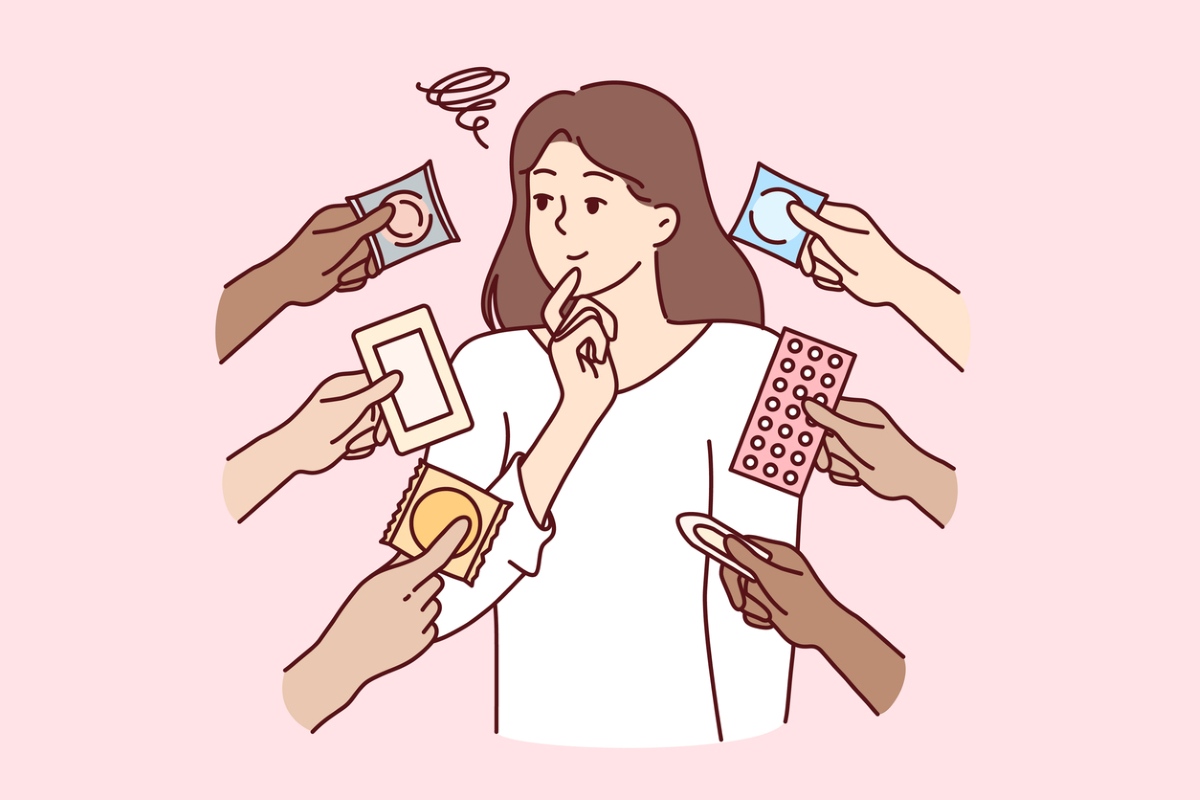
Choosing birth control can feel overwhelming. There are many options, and the best choice depends on your health, lifestyle, and preferred cycle type. Some people want the strongest pregnancy prevention possible. Others prefer hormone-free options. Some want lighter periods or less cramping. Many want something simple and easy to maintain.
Before comparing methods, it helps to name what matters most. Ask yourself:
- Do I want the most effective option?
- Do I want hormones or prefer to avoid them?
- Do I want lighter periods or more predictable bleeding?
- Do I want something low-maintenance?
- How soon might I want to get pregnant?
Effectiveness in Real Life
You may hear about “perfect use” versus “typical use.” Perfect use means the birth control method is used exactly as directed every time. Typical use reflects real life, like missed pills or condoms that break or are not used every time.
Methods that do not require daily action tend to be more reliable in real life because there is less room for mistakes. These are often called long-acting reversible contraception (LARC).
Hormonal vs. Hormone-Free Birth Control
Hormonal methods contain progestin alone or a combination of estrogen and progestin. They prevent pregnancy mainly by stopping ovulation or making it harder for sperm to reach an egg. Many people like hormonal birth control because it can also make periods lighter, less painful, or more predictable. If you have questions about how hormonal birth control works, it helps to separate fact from myth before choosing a method.
Hormone-free methods do not use hormones and do not affect ovulation. These include condoms and other barrier methods, fertility awareness methods, and the copper intrauterine device (IUD).
Intrauterine Devices (IUDs)
An IUD is a small device placed in the uterus by a clinician. It is long-lasting and reversible.
Hormonal IUDs release a small amount of progestin in the uterus. Many patients have lighter periods over time, and some have very little bleeding.
The copper IUD is hormone-free. It is a good option for people who want long-term birth control without hormones. Some people notice heavier bleeding or more cramping at first, especially if their periods are already painful.
If you want something you do not have to think about every day, an IUD may be worth discussing with your provider.
The Implant
The implant is a small, matchstick-sized rod placed under the skin of the upper arm. It releases progestin and prevents pregnancy for 3–5 years. It is very effective and low-maintenance.
The biggest drawback is that it can cause bleeding changes. Some people have lighter periods or no periods at all. Others have spotting or irregular bleeding. If predictability is important to you, talk with your provider about what to expect.
Birth Control Pills, Patches, and the Ring
These options can be a good fit if you do well with routines and want cycle control.
Birth control pills can be combination (estrogen plus progestin) or progestin-only. Many people like the pill because it is easy to start and stop. The downside is that it only works well when taken consistently.
The patch is worn on the skin and changed on a schedule. The vaginal ring is placed in the vagina and worn for three weeks, then removed for one week to allow bleeding to occur.
These methods can be effective, but timing matters. Late changes or missed doses can reduce protection.
Birth Control (Progestin) Injection
The birth control shot is a progestin injection given once every 12–13 weeks. Some people like that it does not require daily attention.
With this injection, bleeding patterns can vary. Some people have lighter periods over time, some have none, while others have irregular bleeding.
There are two things to consider when using the progestin injection: it may take longer for fertility to return after stopping for some people, and it can affect bone density while you are using it. This may not automatically be a deal breaker, but it is important to review your health history and goals.
Condoms and Barrier Methods
Condoms are the only birth control method that also reduces the risk of many sexually transmitted infections (STIs). Even if you use another method for pregnancy prevention, condoms can be a helpful add-on, especially with new partners. Routine STI testing is also an important part of sexual health care.
Other barrier options include diaphragms and cervical caps used with spermicide. These require planning and correct use.
Fertility Awareness Methods
Fertility awareness involves tracking signs of ovulation, such as cycle timing, cervical mucus changes, and basal body temperature. Some people prefer this approach because it is hormone-free.
These methods require consistent tracking and reliable education. They can be less reliable if your cycles are irregular, if you are postpartum, breastfeeding, stressed, traveling, or sick. If you are interested, talk with your provider about whether this is a safe and realistic fit for you.
Emergency Contraception
Emergency contraception can help prevent pregnancy after unprotected sex or birth control failure. It is not meant to replace a regular method of birth control, but it is important to know it exists.
Timing matters. If you think you may need emergency contraception, reach out as soon as possible so you can choose the best option for your situation.
Health Factors That Can Change the Best Option
Your medical history will determine which birth control methods are best for you. Some people should avoid estrogen-containing methods due to certain risks. Others do well with them and like the cycle control they provide.
It helps to talk through migraines, blood pressure, smoking status, postpartum or breastfeeding status, and any history of blood clots. Your gynecology provider can help you choose an option that is both safe and comfortable.
Choosing a Method You Can Feel Good About
Many people switch birth control methods as their needs change. The right option is the one that fits your health, matches your priorities, and feels manageable in your daily life.
If you are wondering which birth control option is right for you, schedule an appointment with Bloom OB/GYN. We can review your health history, talk through your goals with you, and help you choose a method that feels like the right fit.
